Location
Austria, Styria, Graz
Bürgerspital church Holy Spirit (Bürgerspitalskirche Hl Geist)
Gries
Artwork
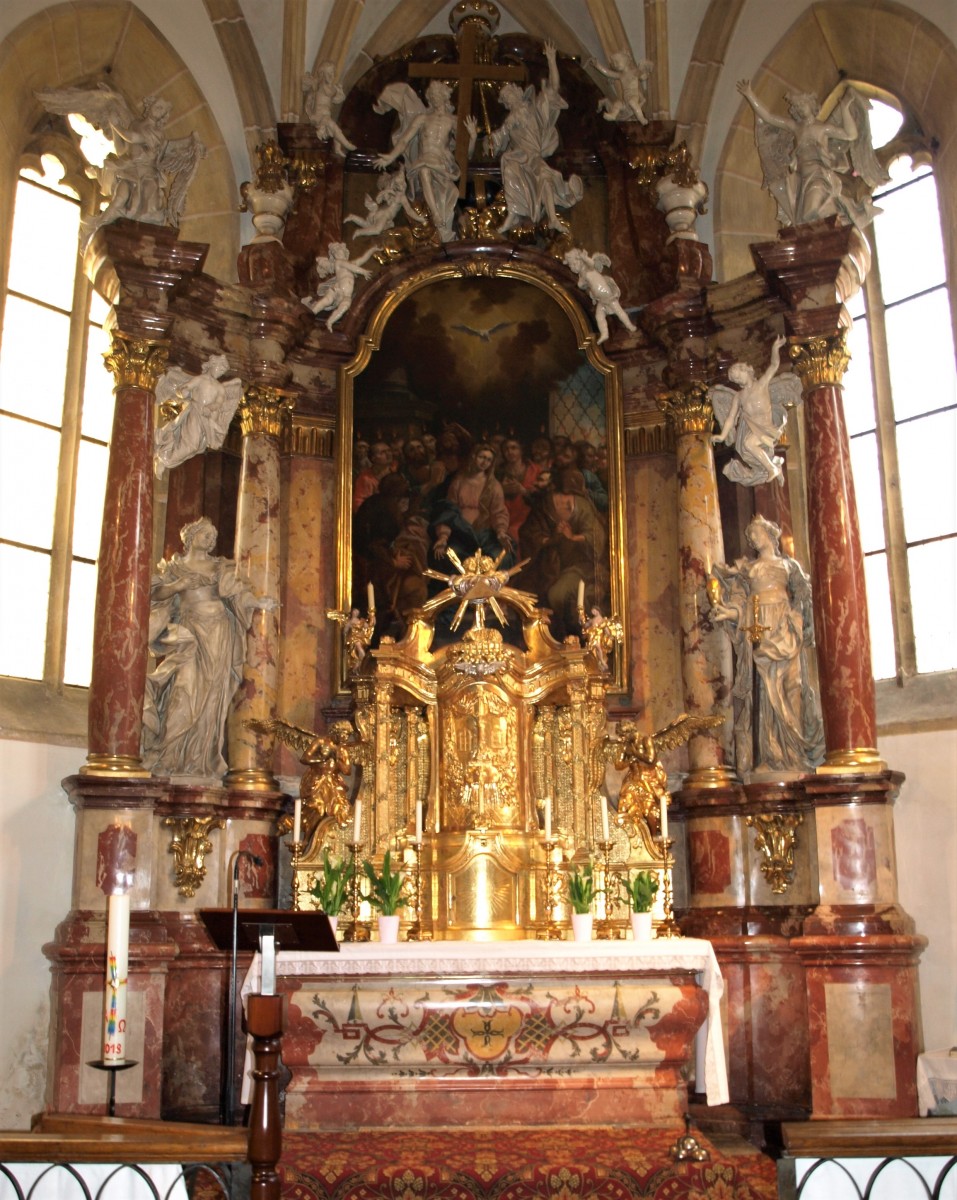
The sculptures (Holy Trinity, angels, putti and vases) of the high altar of Bürgerspital church in Graz
Type
Sculptural group
Critical History
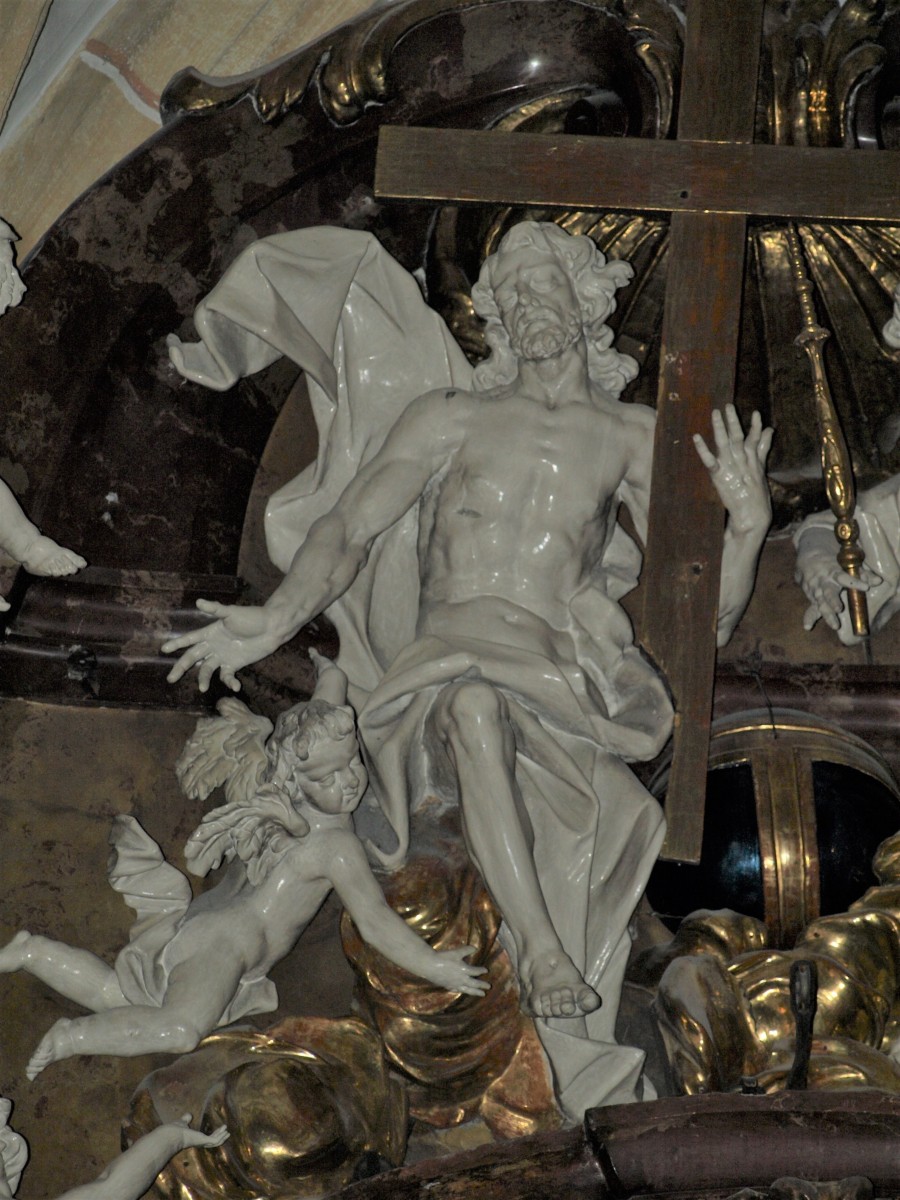
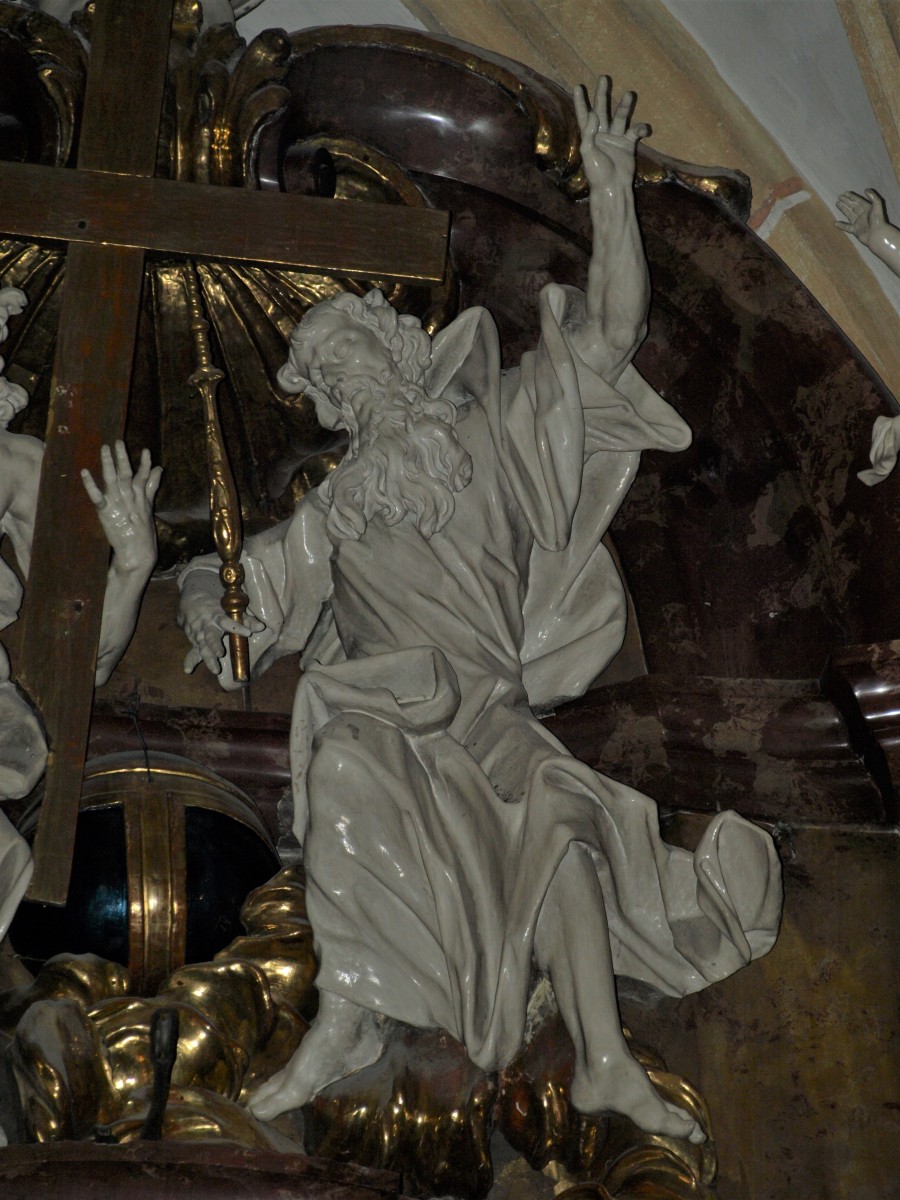
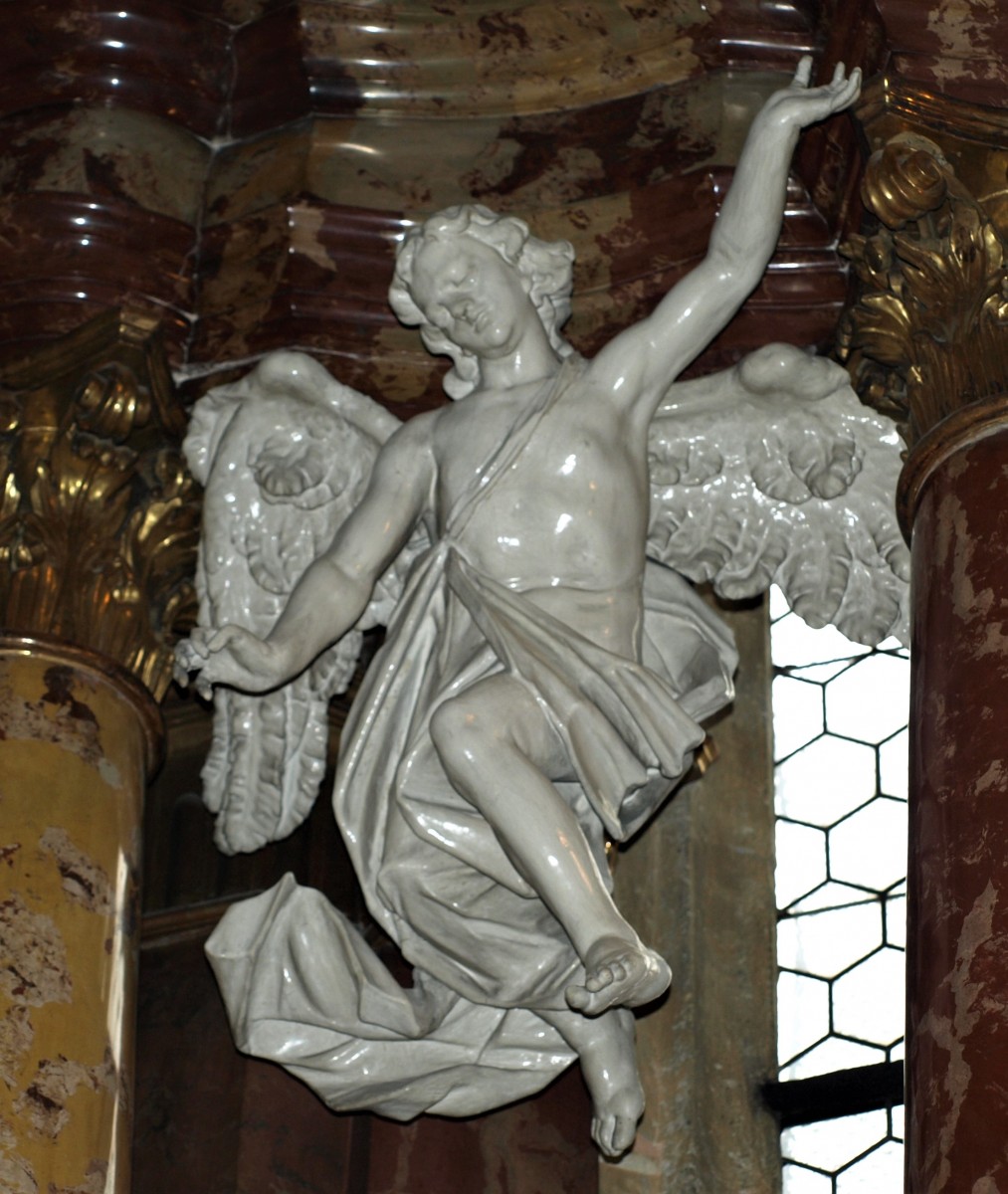
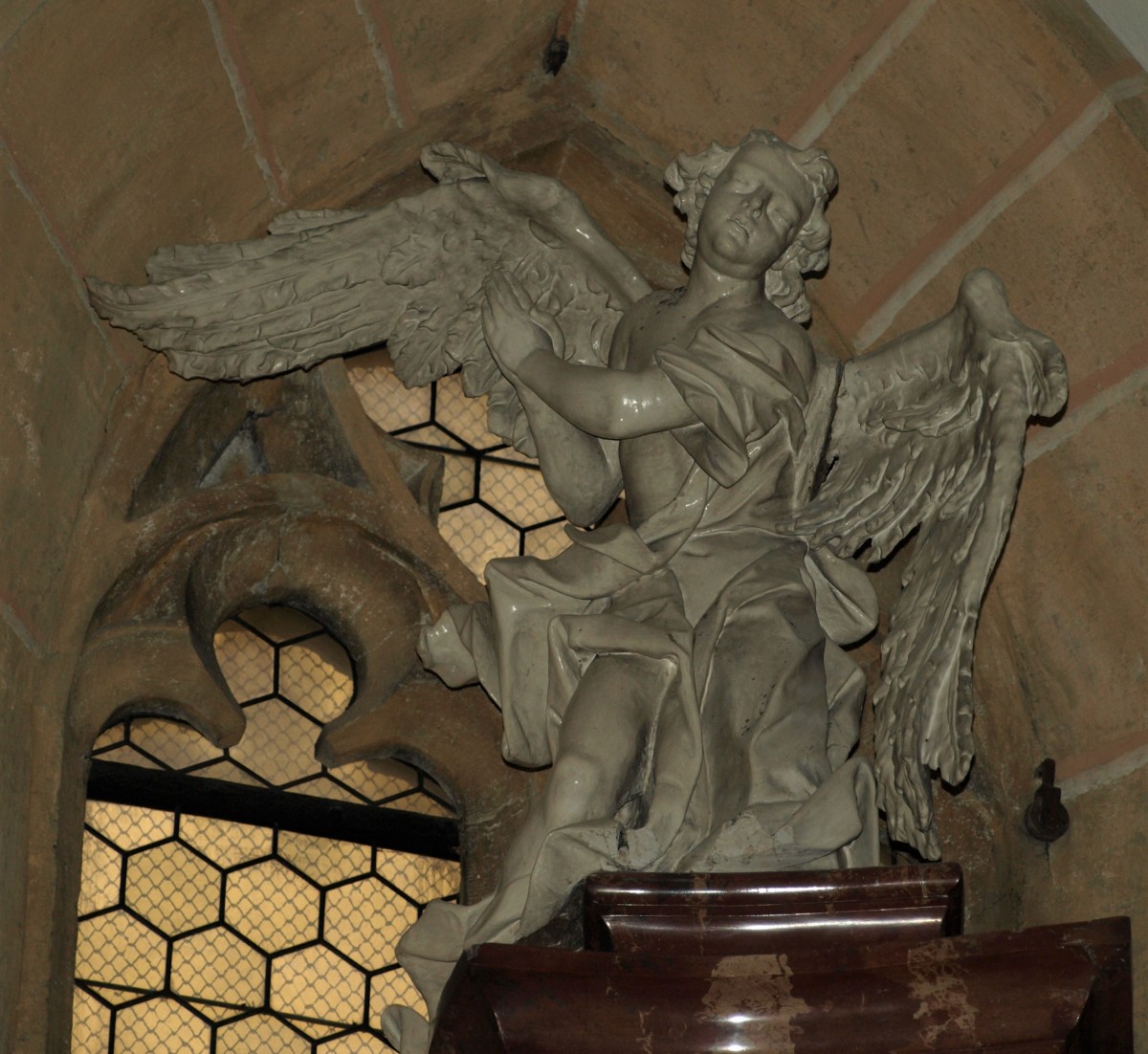
The sculptural decoration of the high altar, two side altars and the pulpit of Bürgerspital church can be regarded as Philipp Jakob Straub’s first extensive work and can be dated between 1734 and 1738.1 The draft was made by Schoy, who originally received the work order; Straub took it over after his death.2 For the high altar Straub created two sculptures, which are situated left and right of the high altarpiece between two columns. The carved wooden sculptures in the upper zone – Holy Trinity, angels, putti and vases – are not attributed to Straub himself, but they appear to be created in his style. The highly extensive gesture, the mannered posture of the fingers and the expressive physiognomy with bulging eyes, that can be seen especially at the sculptures of Christ and God – are typical for Straub’ oeuvre. What speaks against his authorship is the strong slenderness of the sculptures, the flat appearance of the drapery as well as anatomical incorrectness (e.g. left arm of God the Father).
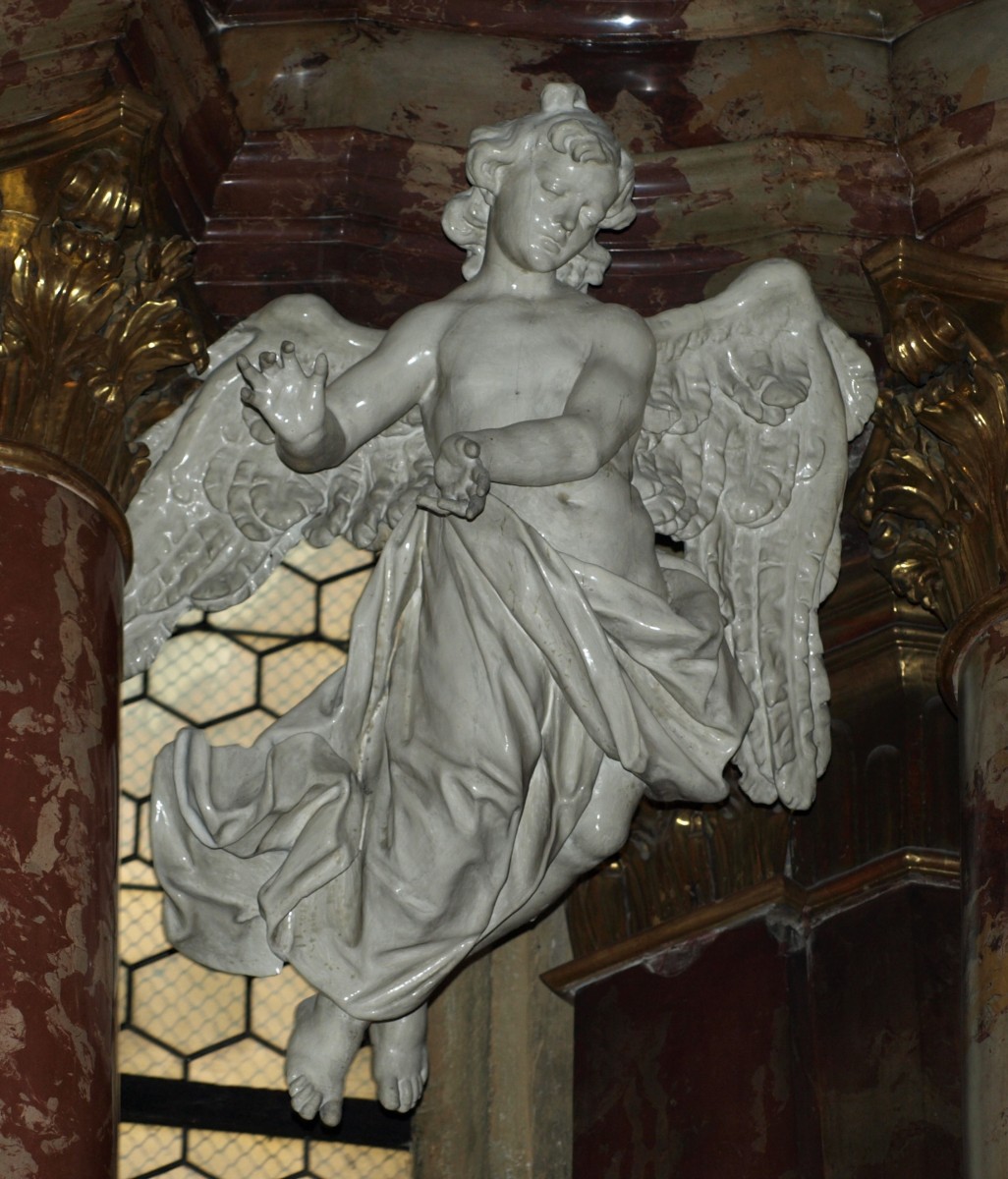
Especially the four angels show a varying quality: The best one on the entablature far left shows a sophisticated body composition and one artfully folded wing (to adjust to the church’s architecture). His counterpart (far right) is of lower quality, what becomes evident by the apparently dislocation of his legs.
Construction / Execution
The sculptures are made of carved wood and they are coloured in white. The cloudscape as well as the attributes are coloured/gilded.
Components
- Sculpture
- Completed: 1734 – 1738
- Technique(s): wood carving
- Material(s): wood
- Polychromy
- Completed: 1734 – 1738
Images
- The high altar of Bürgerspital church in Graz (photo by Anja Lindbichler, 2018)
- Christ, detail, high altar, Bürgerspital church, Graz (photo by Anja Lindbichler, 2018)
- God the Father, detail, high altar, Bürgerspital church, Graz (photo by Anja Lindbichler, 2018)
- Angel left, detail, high altar, Bürgerspital church, Graz (photo by Anja Lindbichler, 2018)
- Angel right, detail, high altar, Bürgerspital church, Graz (photo by Anja Lindbichler, 2018)
- Angel on entablature (right), detail, high altar, Bürgerspital church, Graz (photo by Anja Lindbichler, 2018)
Catalogue entry prepared by Christina Pichler, Margit Stadlober
Recommended citation: Christina Pichler, Margit Stadlober, The sculptures (Holy Trinity, angels, putti and vases) of the high altar of Bürgerspital church in Graz, in: TrArS – Tracing the Art of the Straub Family, 2018, (accessed 02/04/2026) URL
