Location
Austria, Styria, Graz
Welsche church (Welsche Kirche)
Gries
Artwork
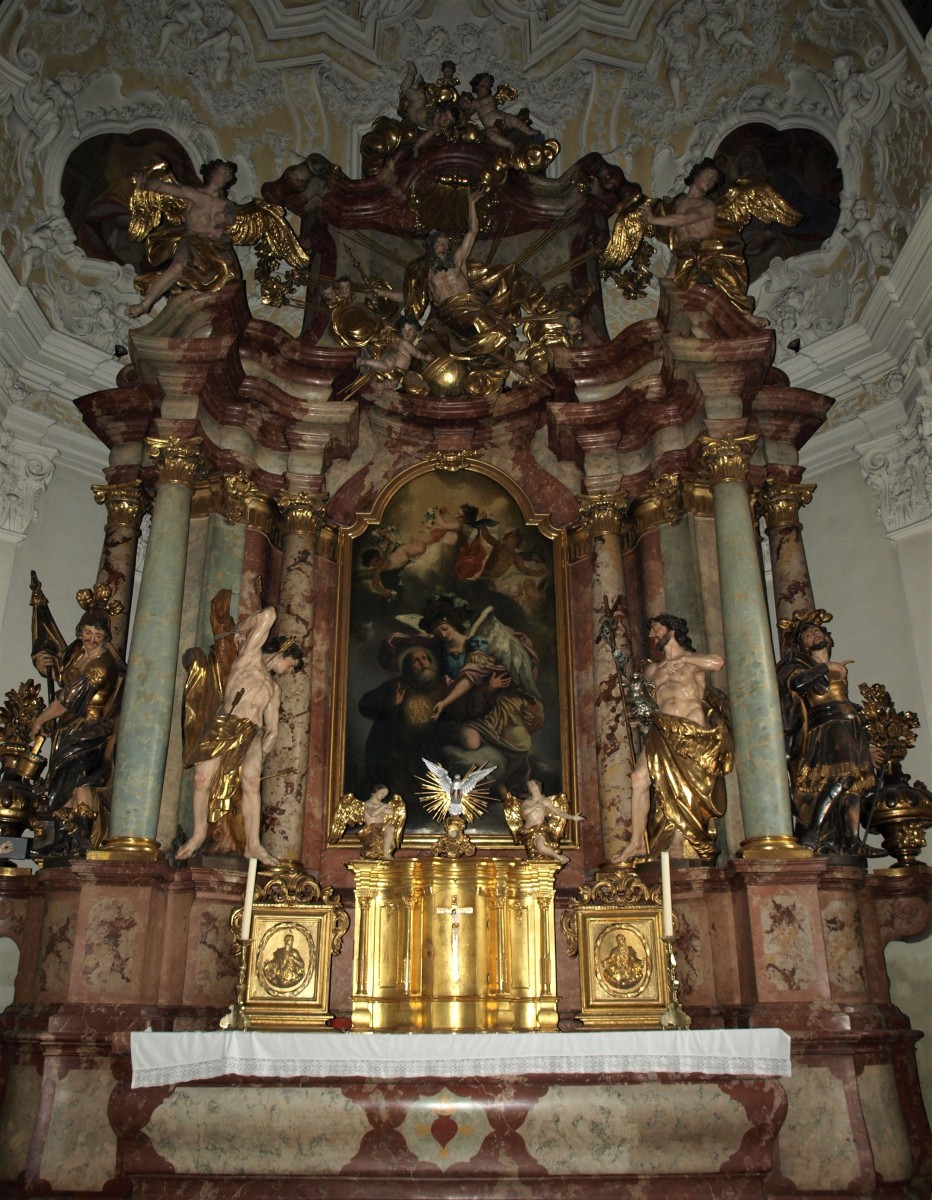
The high altar of Welsche church in Graz
Type
High altar
Critical History
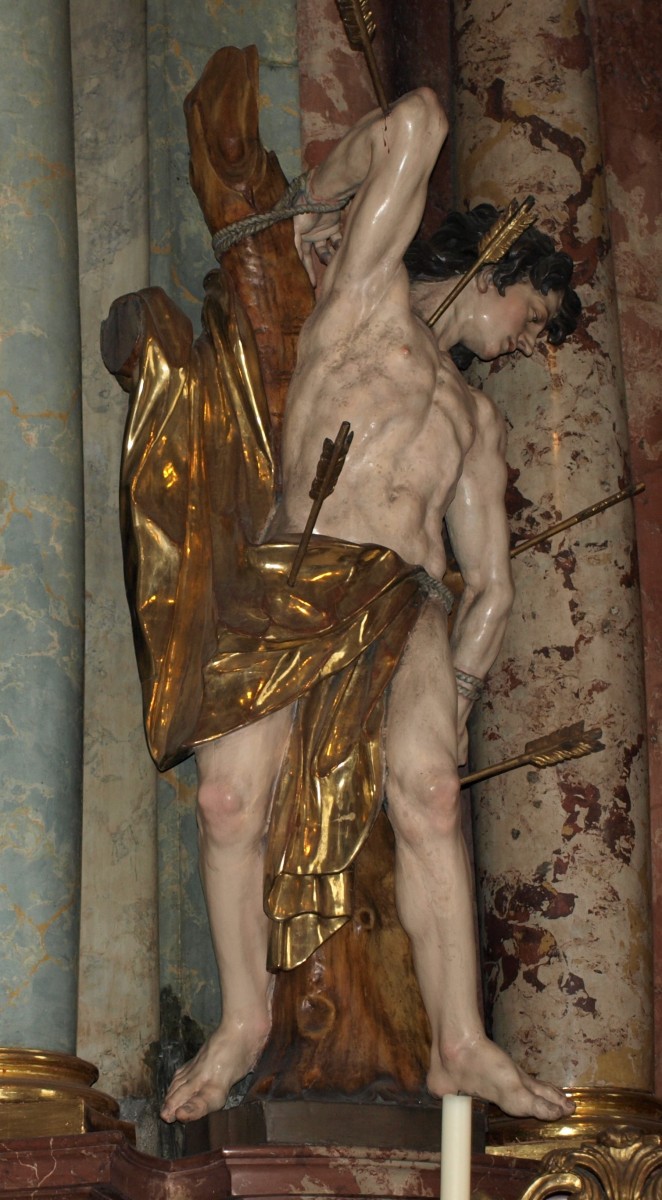
Rochus Kohlbach notes, that the sculptures of the high altar show common features with works of Joseph Schokotnigg, but also with those of Philipp Jakob Straub.1 For the former speaks the buoyant drapery of the side sculptures. For the latter speaks the almost “grotesque” execution of the physiognomies as well as the half-hanging, half-sinking sculpture of St Sebastian. The saint appears as sheer copy of that on the right side altar of Ehrenhausen, whose sculptures were created by Straub. Also the wide-spread wings of the angels on the entablature are typical for the artist’s oeuvre.
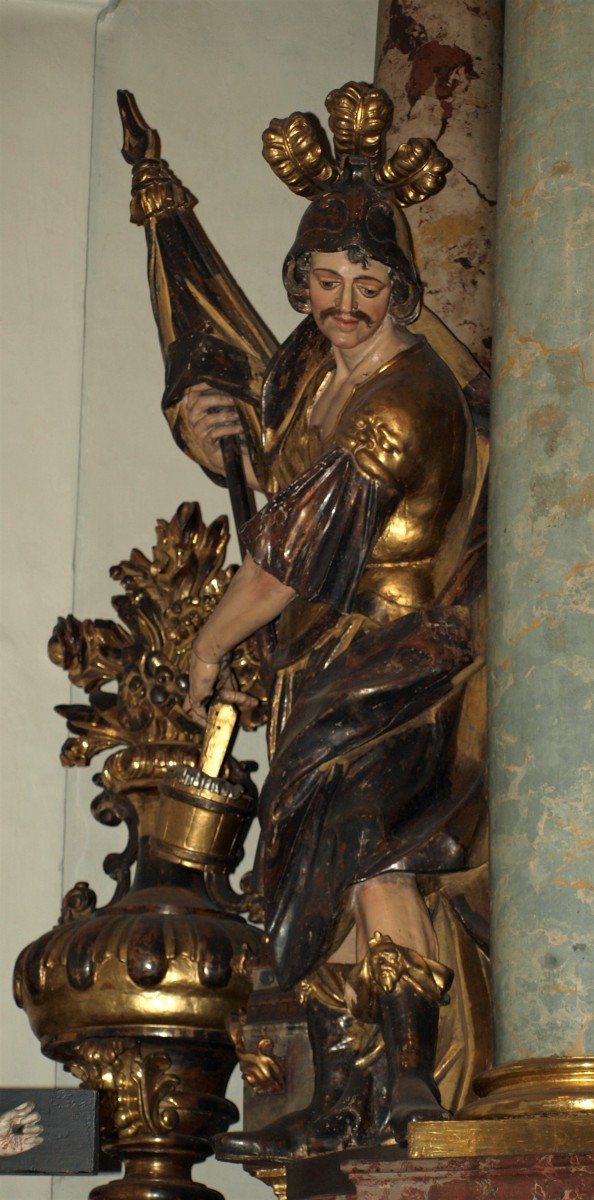
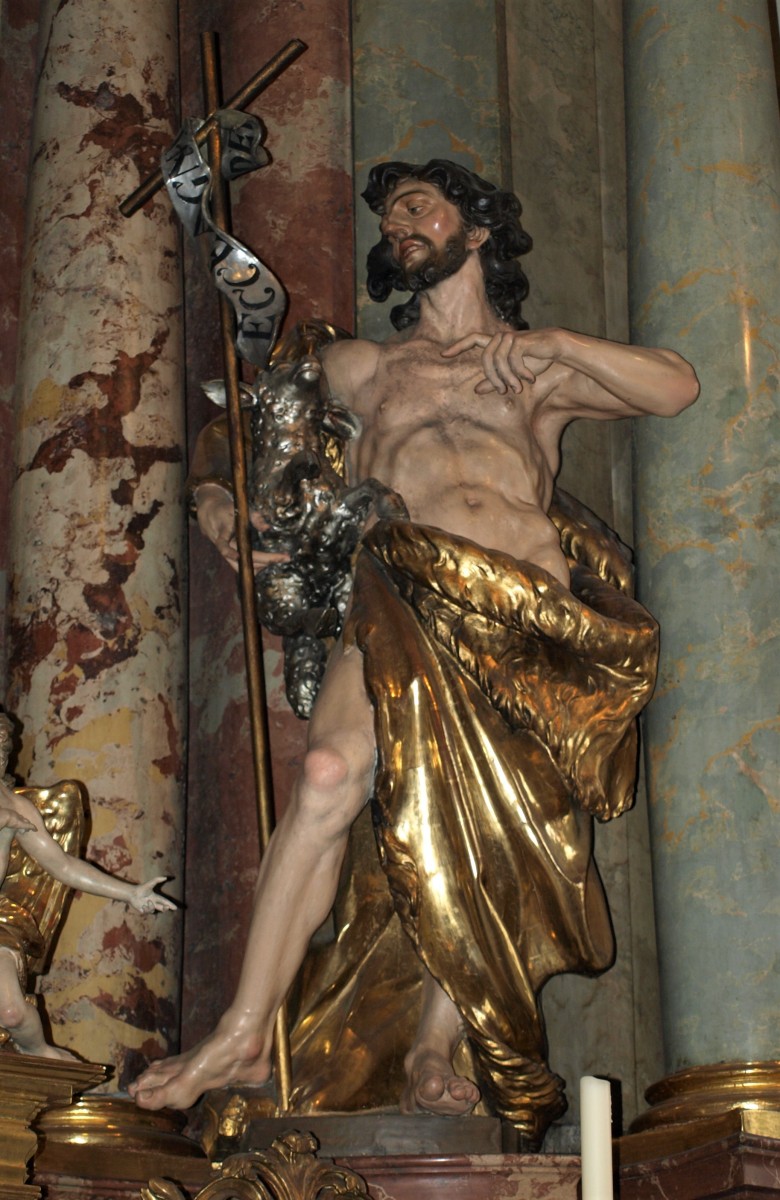
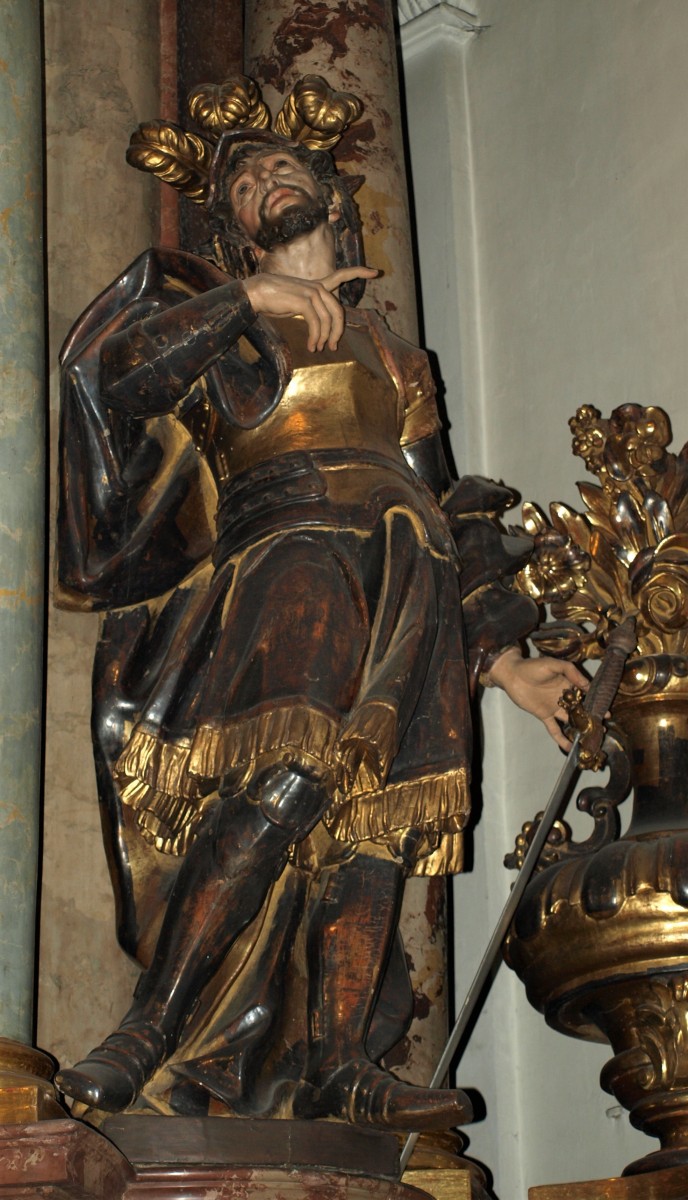
The sculptures of St Florian, St Sebastian, St John the Baptist and St Donate are very vivacious with a pronounced contrapost. They are good examples for the artist’s middle “expressive” period: the figures are more twisted, the standing more unstable, head and upper body are in strong motion (leant towards the far outstretched free leg which is overlapped by the related arm. Furthermore, bouffant drapery causes a remarkable silhouette.2 Also the clouds are characteristic for Straub’s work.
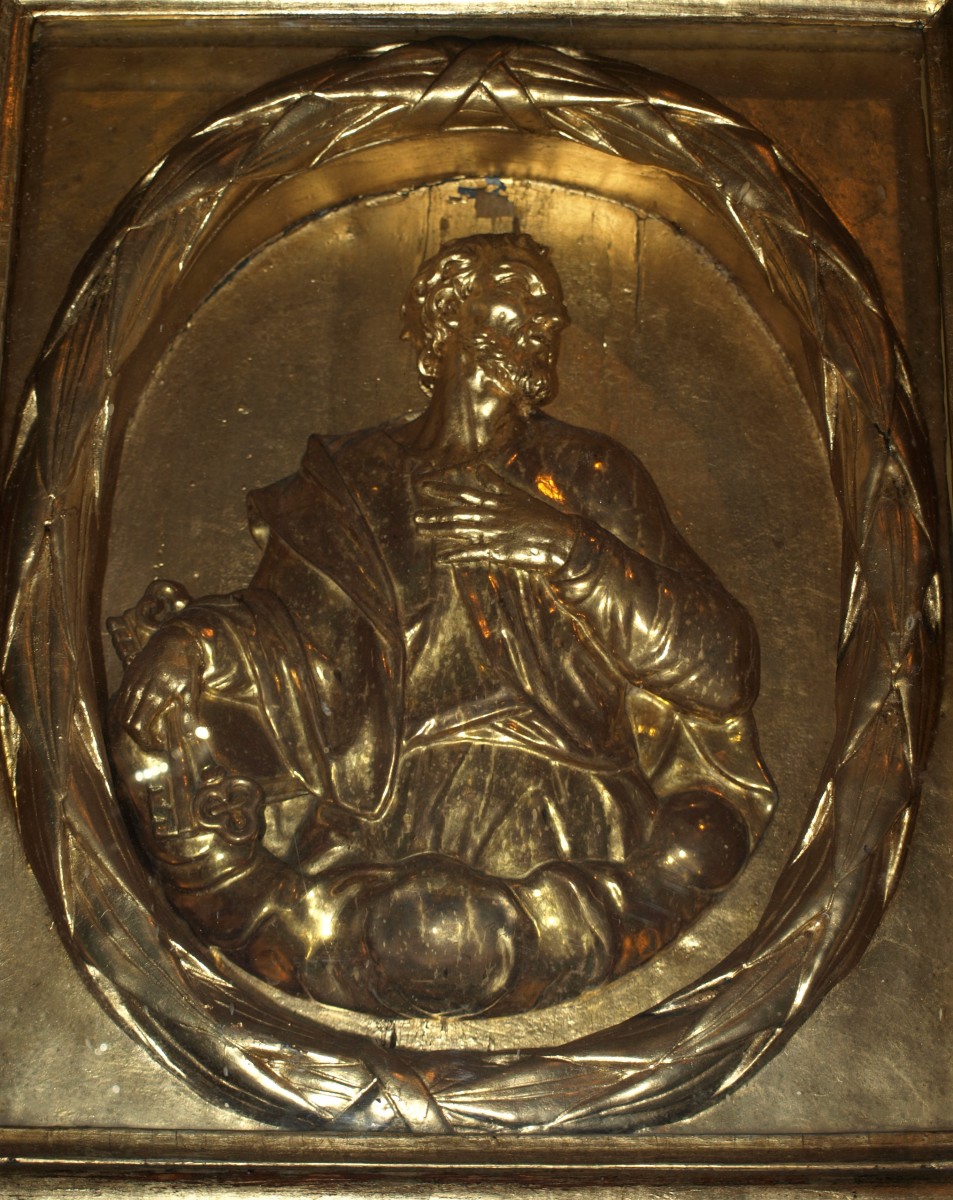
The sides of the baroque tabernacle of the high altar show two glazed reliefs, one with the half-figure of St Peter, the other with that of St Paul. They were created about 17463 and are also attributable to Philipp Jakob Straub.
Construction / Execution
The altar and the sculptures are made of wood. The middle zone is characterised by its column system, the upper zone shows a cranked entablature.
Components
- Carpentry
- Completed: 1746
- Patron(s): Franz von Laturner, noble
- Technique(s): sawing
- Material(s): wood
- Sculpture
- Author: Philipp Jakob Straub (Wiesensteig 1706 – Graz 1774)
- Completed: 1746
- Technique(s): wood carving
- Material(s): wood
- Polychromy
- Completed: 1746
Conservation-restoration
- 1960
Treatment Description
The high altar was restored in 1960.1
Images
- The high altar of Welsche church in Graz (photo by Christina Pichler, 2018)
- The sculpture of St Florian, high altar, Welsche church, Graz (photo by Christina Pichler, 2018)
- The sculpture of St Sebastian, high altar, Welsche church, Graz (photo by Christina Pichler, 2018)
- The sculpture of St John the Baptist, high altar, Welsche church, Graz (photo by Christina Pichler, 2018)
- The sculpture of St Donate, high altar, Welsche church, Graz (photo by Christina Pichler, 2018)
- Relief St Peter, tabernacle, high altar, Welsche church, Graz (photo by Christina Pichler, 2018)
Catalogue entry prepared by Christina Pichler, Margit Stadlober
Recommended citation: Christina Pichler, Margit Stadlober, The high altar of Welsche church in Graz, in: TrArS – Tracing the Art of the Straub Family, 2018, (accessed 26/01/2026) URL
