Location
Austria, Styria, Weizberg
Basilica of the Sorrowful Virgin Mother (Basilika zur Schmerzhaften Mutter Gottes)
Weizberg
Artwork
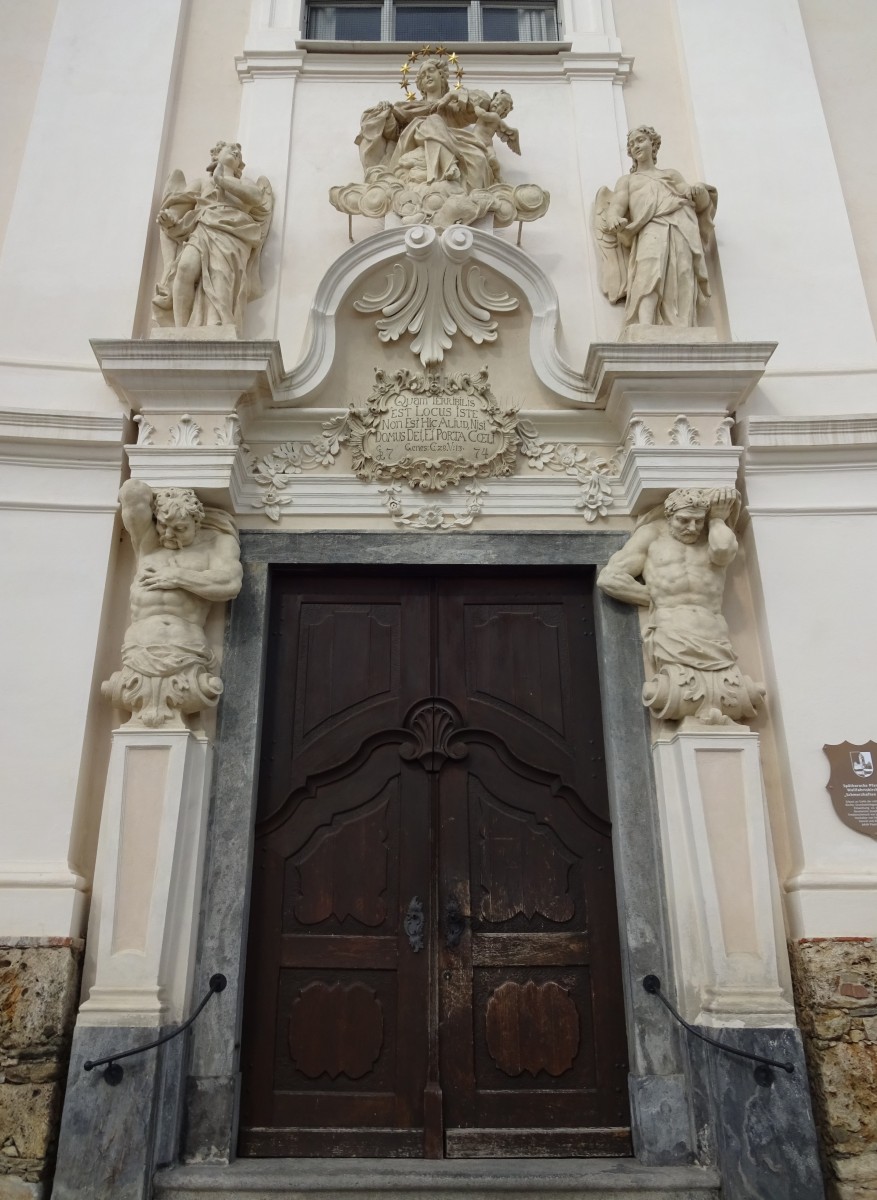
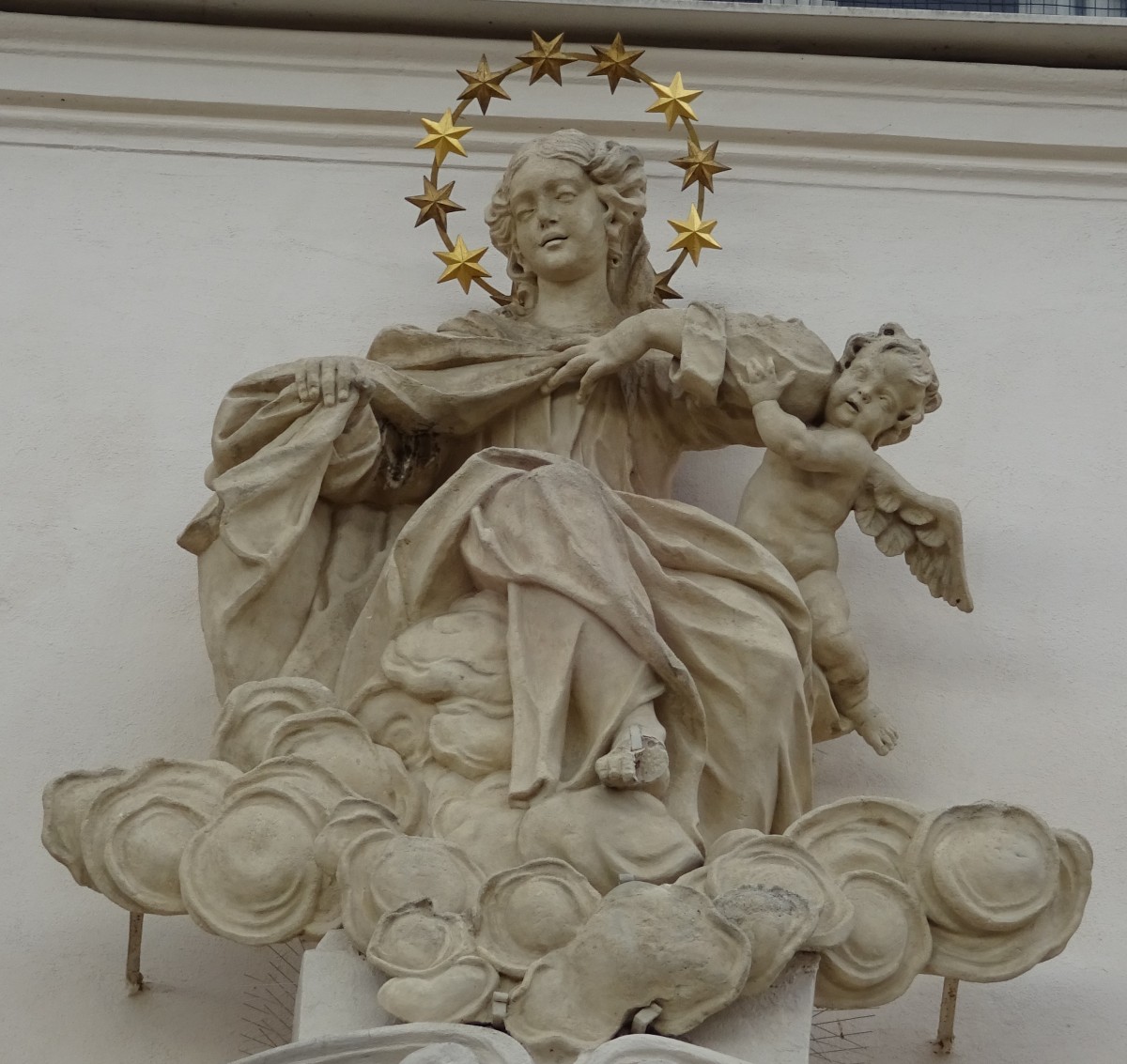
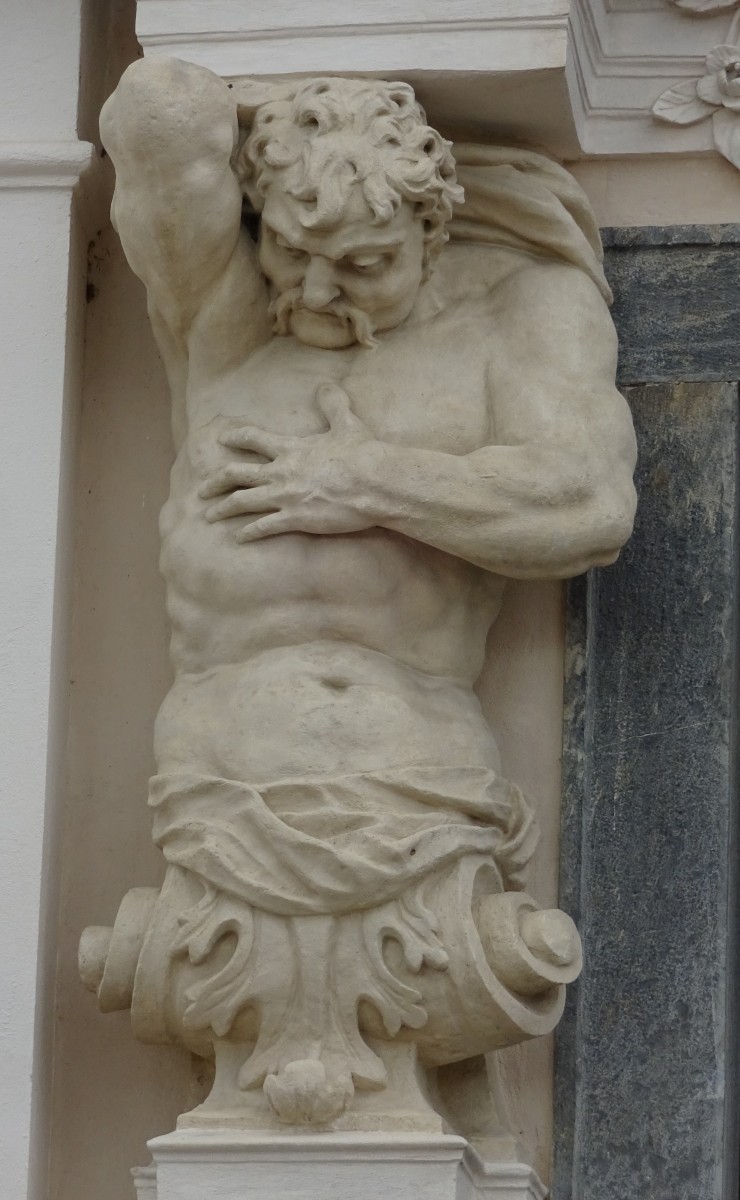
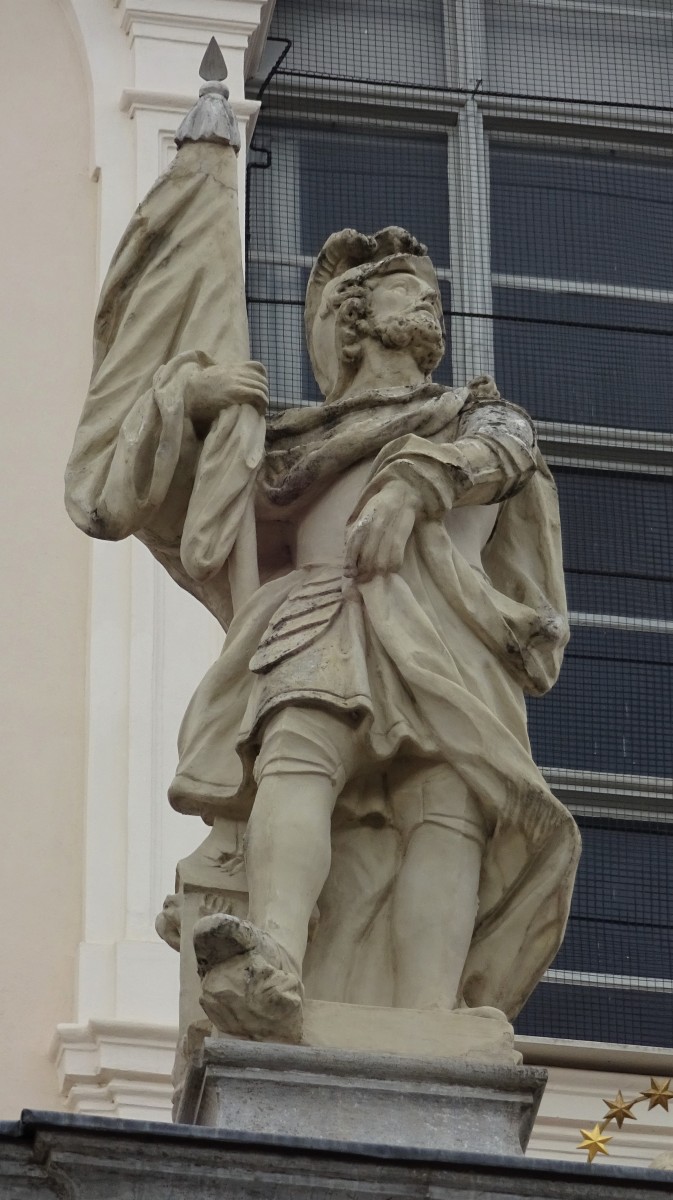
Five façade sculptures representing the Ascension of Mary, two angels and two atlantes. Two sculptures on the double-armed open staircase (St Florian and St Donatus), Basilica Weizberg
Type
Sculptural group
Critical History
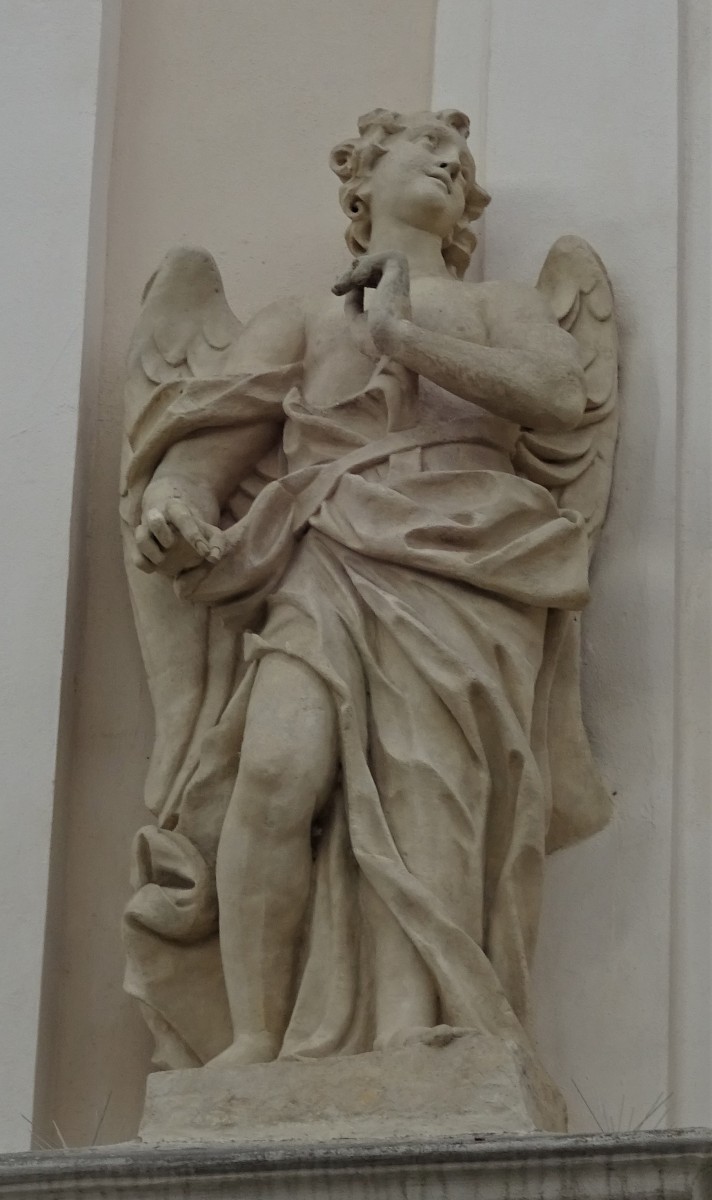
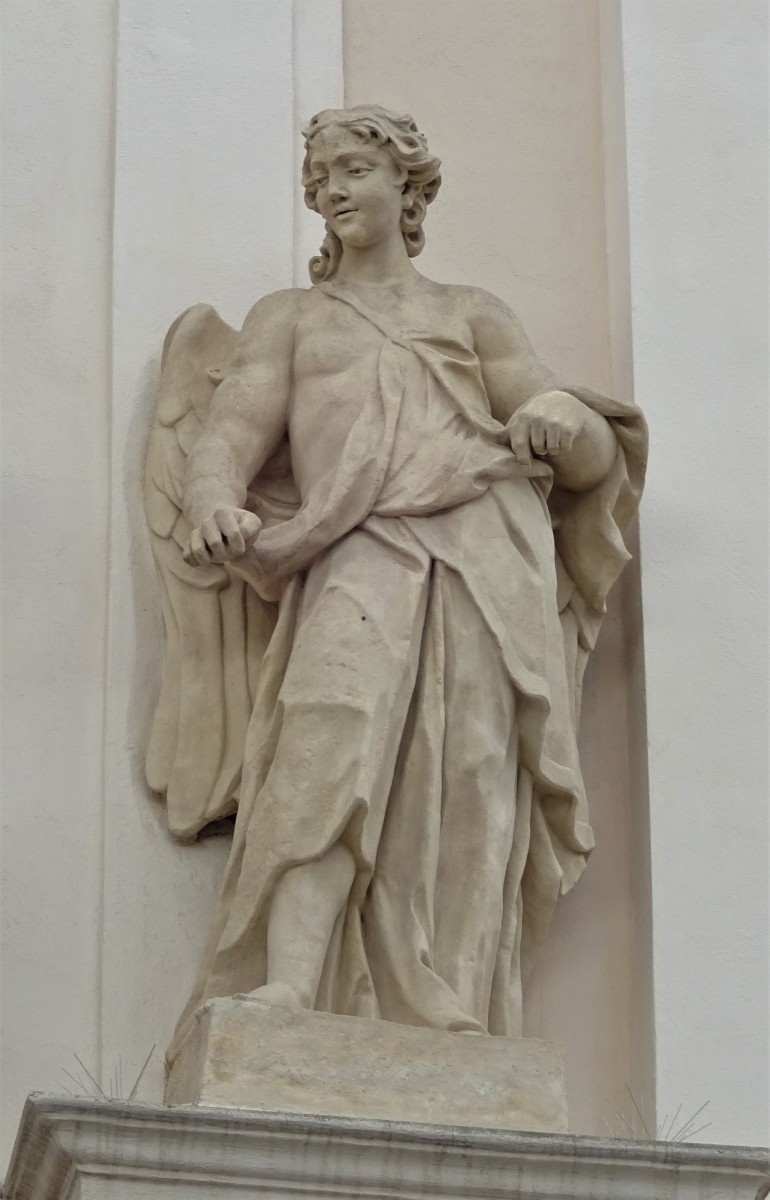
According to Kohlbach, the façade with the main portal was finished in 1774.1 It is crowned by the central motif of the Ascension of Mary, accompanied by a putto as well as two flanking angels on a square base holding floral wreaths. It should be noted that the motif of the Ascension is partly interpreted as Madonna with Child in literature, although the figure next to Mary is definitely a putto. (The sculpture of Madonna with Child can be found above the Ascension in a niche between the two towers. It is attributed to Zeilinger the Elder and used to be in Castle Münichhofen).2 These sculptures were taken from the old church, where they also decorated the main portal.3 The two atlantes, each with one arm raised and one arm led to the chest and the back respectively, are carrying the entablature on which the angels are positioned.
The double-armed open staircase according to plans by Joseph Hueber was finished in 1756.4 On it, there are the sculptures of St. Florian and St. Donatus. According to Kohlbach, they are attributed to Straub and they also belonged to the old church. In the course of the church’s renovation, they were restored and impregnated with varnish.5
Construction / Execution
The sculptures are made of carved sandstone.
Components
- Sculpture
- Author: Philipp Jakob Straub (Wiesensteig 1706 – Graz 1774)
- Completed: 1774
- Technique(s): stone carving
- Material(s): sandstone
Comment
The Cartouche above the main portal shows the inscription: “quam terribilis/ est locus iste/ non est hic aliud/ nisi domus dei, ei porta coeli/ genes: C: 28.V.13/ 1774”
Images
- Main Portal of the Basilica in Weizberg (photo by Nathalie Winter, 2018)
- The Ascension of Mary, Basilica Weizberg (photo by Nathalie Winter, 2018)
- Angel (left) flanking the Madonna, Basilica Weizberg (photo by Nathalie Winter, 2018)
- Angel (right) flanking the Madonna, Basilica Weizberg (photo by Nathalie Winter, 2018)
- Atlant (left) next to the main portal, Weizberg Basilica (photo by Nathalie Winter, 2018)
- The statue of St Florian on the double-armed open staircase in front of the Basilica Weizberg (photo by Nathalie Winter, 2018)
Catalogue entry prepared by Christina Pichler and Margit Stadlober
Recommended citation: Christina Pichler and Margit Stadlober, Five façade sculptures representing the Ascension of Mary, two angels and two atlantes. Two sculptures on the double-armed open staircase (St Florian and St Donatus), Basilica Weizberg, in: TrArS – Tracing the Art of the Straub Family, 2018, (accessed 02/07/2026) URL
