Location
Austria, Styria, Graz
Basilica Nativity of St Mary (Basilika Mariae Geburt)
Purberg
Artwork
The sculptures of the main portal of the Basilica Mariatrost in Graz
Type
Sculptural group
Critical History
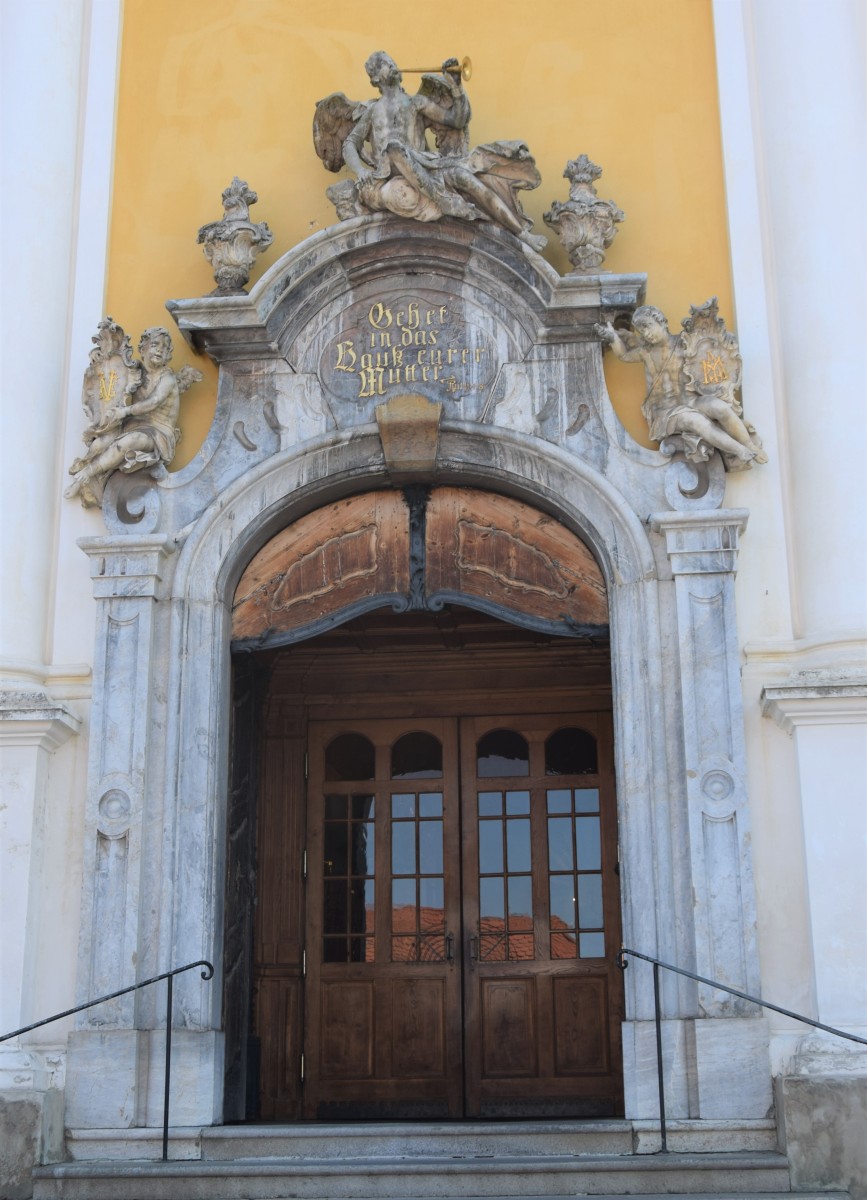
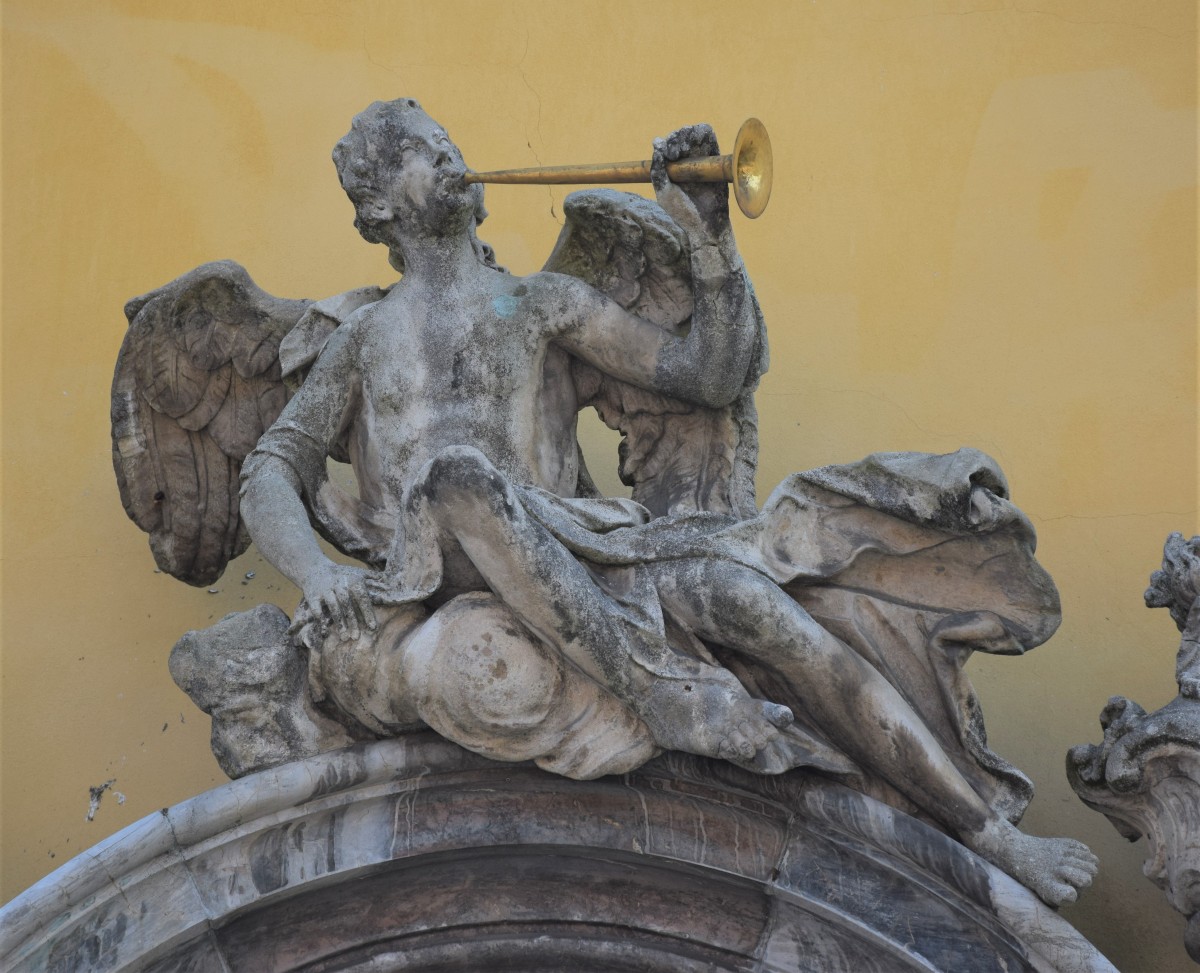
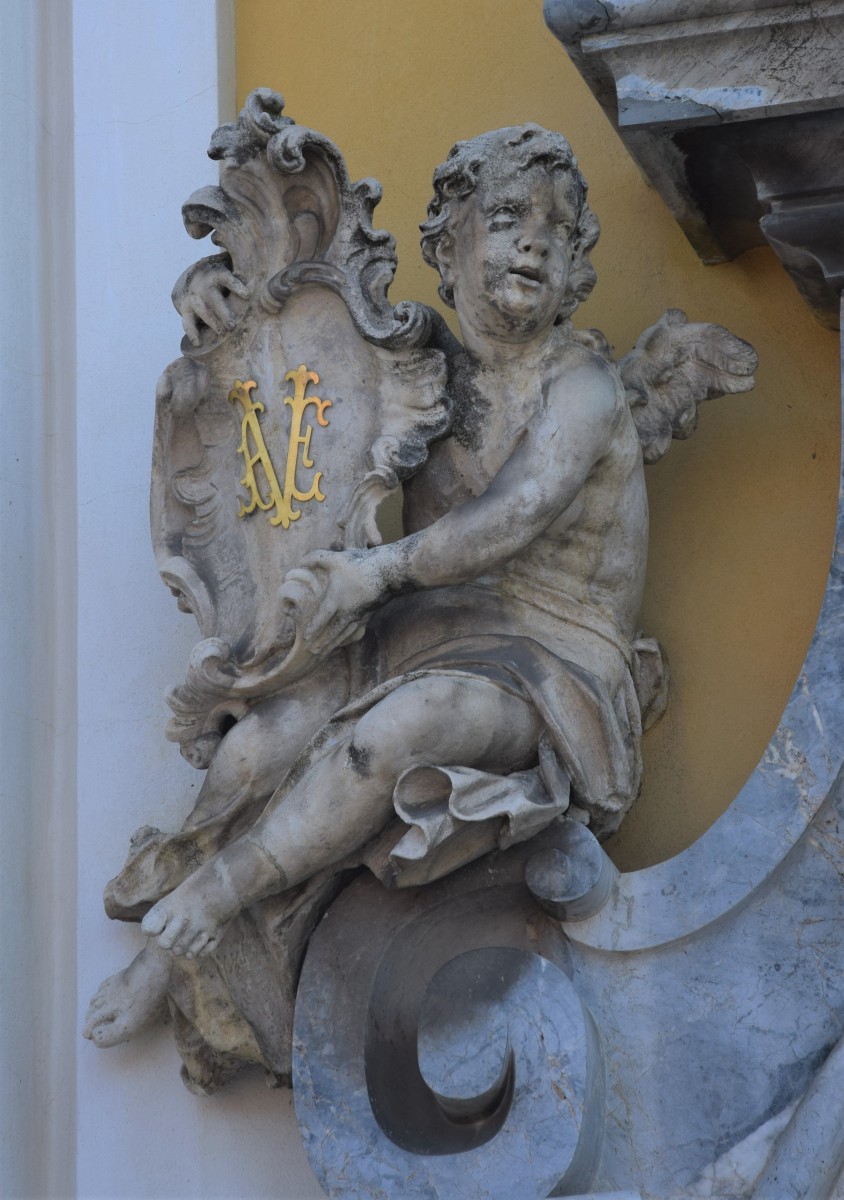
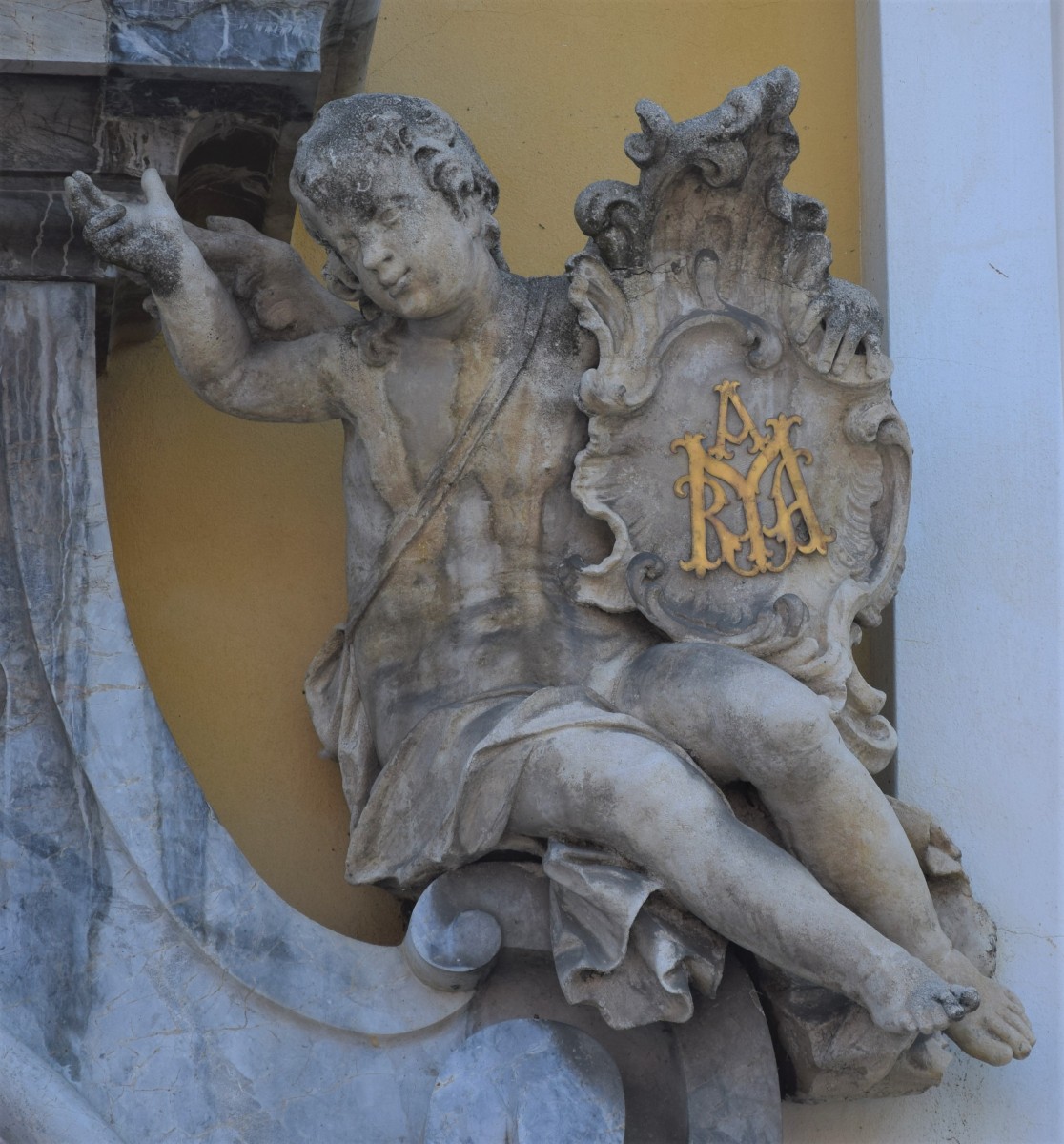
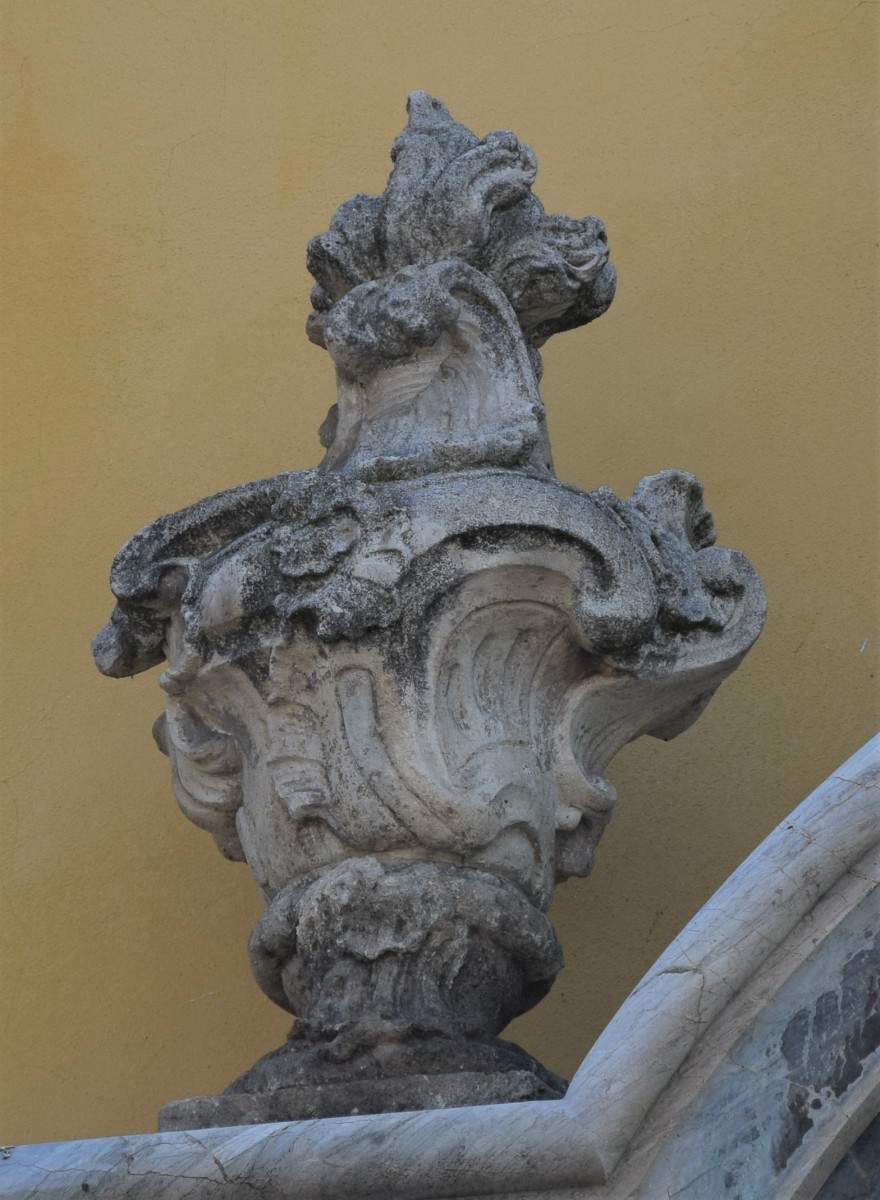
The laying of the foundation stone of the Basilica Mariatrost took place in 1714.1 It can be seen as one of the most important churches of high baroque era in eastern Austria. It’s characterised by its cross-vaulted dome and surrounded by monastic edifices forming a horseshoe.2 The main façade at the western side shows an impressive basket-arch marble portal from about 1770 (presumable by Joseph Hueber).3 It is crowned by the sandstone sculptures of Philipp Jakob Straub: On top, there is a trombone-playing angel, sitting on a pile of clouds, whose execution is typical for Straub’s oeuvre. Its coat is draped around the lower body and appears to be moved by the wind. The angel is flanked by two rocaille-vases. One zone below, there are two putti sitting on volutes. Each of them holds a rocaille-cartouche with a monogram.
The sculptures are of the high technical quality and artistic meaningfulness typical for the artist’s other sandstone statues of that period – in contrast to the carvings, which already show classical tendencies.4
Construction / Execution
The sculptures are made of carved sandstone.
Components
- Sculpture
- Author: Philipp Jakob Straub (Wiesensteig 1706 – Graz 1774)
- Completed: 1765 – 1770
- Technique(s): stone carving
- Material(s): stone
Comment
The collaboration between Philipp Jakob Straub and Joseph Hueber is not an isolated case and can be seen from several examples, like the façade sculptures of Mariahilf Church as well as the sculptures of Mariahilferstraße 1 and 16.
Conservation-restoration
- 1977
Treatment Description
The sculptures were restored in 1977.1 They show severe weather damage and a partially smoothened surface. Especially the angel is in a bad condition, which is visible in several cracks (e.g. left forearm).
Images
- The main portal of Basilica Mariatrost, Graz (photo by Christina Pichler, 2018)
- Angel with trombone, portal Basilica Mariatrost, Graz (photo by Christina Pichler, 2018)
- Putto with cartouche (left), portal Basilica Mariatrost, Graz (photo by Christina Pichler, 2018)
- Putto with cartouche (right), portal Basilica Mariatrost, Graz (photo by Christina Pichler, 2018)
- Rocaille-vase, portal Basilica Mariatrost, Graz (photo by Christina Pichler, 2018)
Catalogue entry prepared by Eva Klein, Christina Pichler
Recommended citation: Eva Klein, Christina Pichler, The sculptures of the main portal of the Basilica Mariatrost in Graz, in: TrArS – Tracing the Art of the Straub Family, 2018, (accessed 19/05/2026) URL
