Location
Croatia, City of Zagreb, Vugrovec Donji
Parish church of St Francis Xavier (Župna crkva sv. Franje Ksaverskog)
Artwork
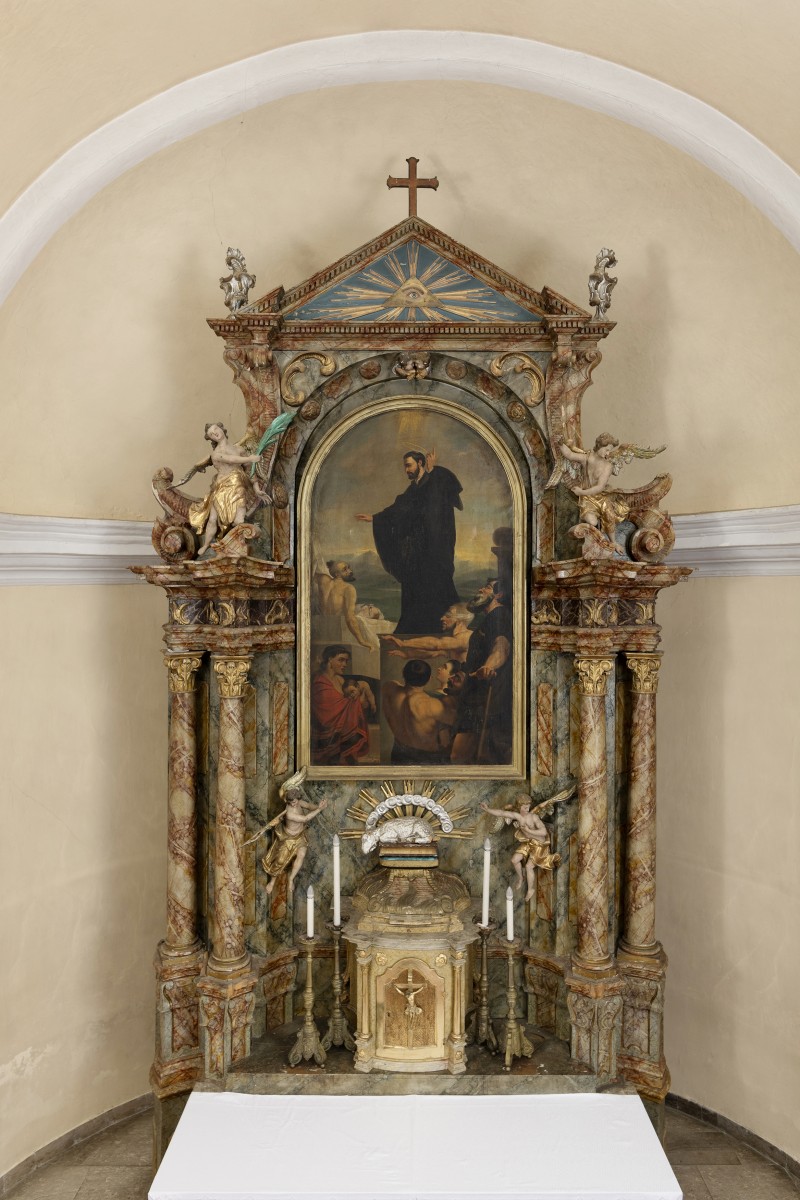
High Altar of the Parish Church of St Francis Xavier in Vugrovec
Type
High altar
Dimensions
Height: 600 cm, width: 365 cm, depth: 80 cm
Inscriptions
- OBNOVLJENO god. 1944 / 7. STUDENA NOVCEM / ŽUPNE CRKVE. / PO IVANU ROBNIKU IZ ZAGREBA / ZA ZA ŽUPNIKA IVANA MITREČIĆ. / CRKVENIH ODBOR... (on the right side of the concrete mensa)
- Stroy pinx: / 1838. (on the painting of St Francis Xavier)
- 1759 (above the entrance towards the old part of the building)
- Felix Stuhec / (poz)latio 1897 (on the pulpit)
- Renovirat / 1897 / 1/9 W. E. (on the side altar of Our Lady)
Critical History
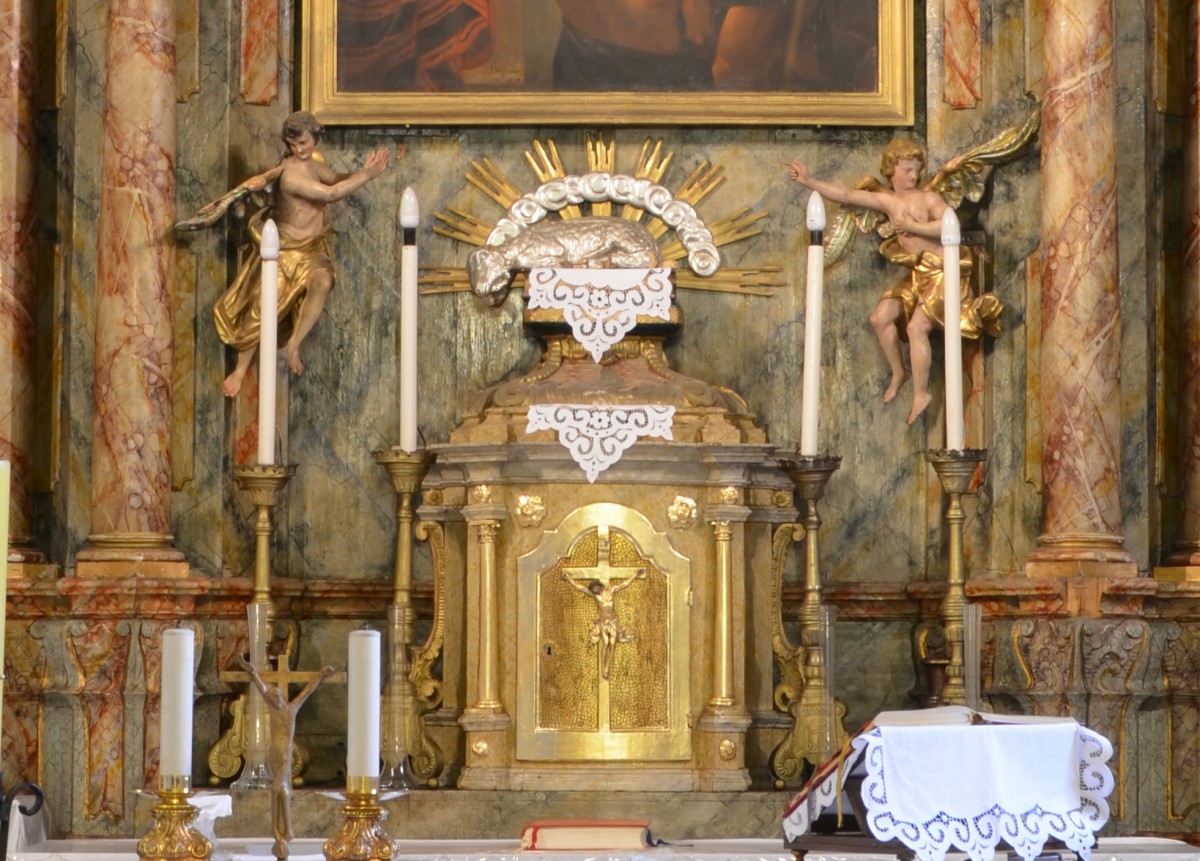
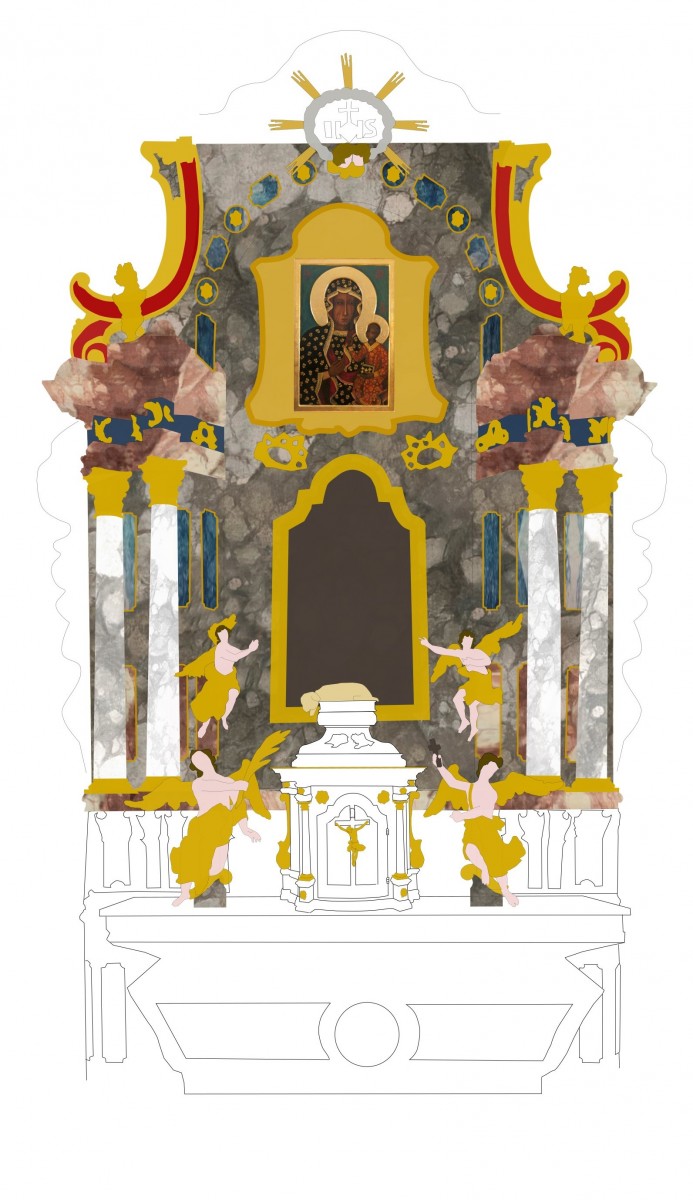
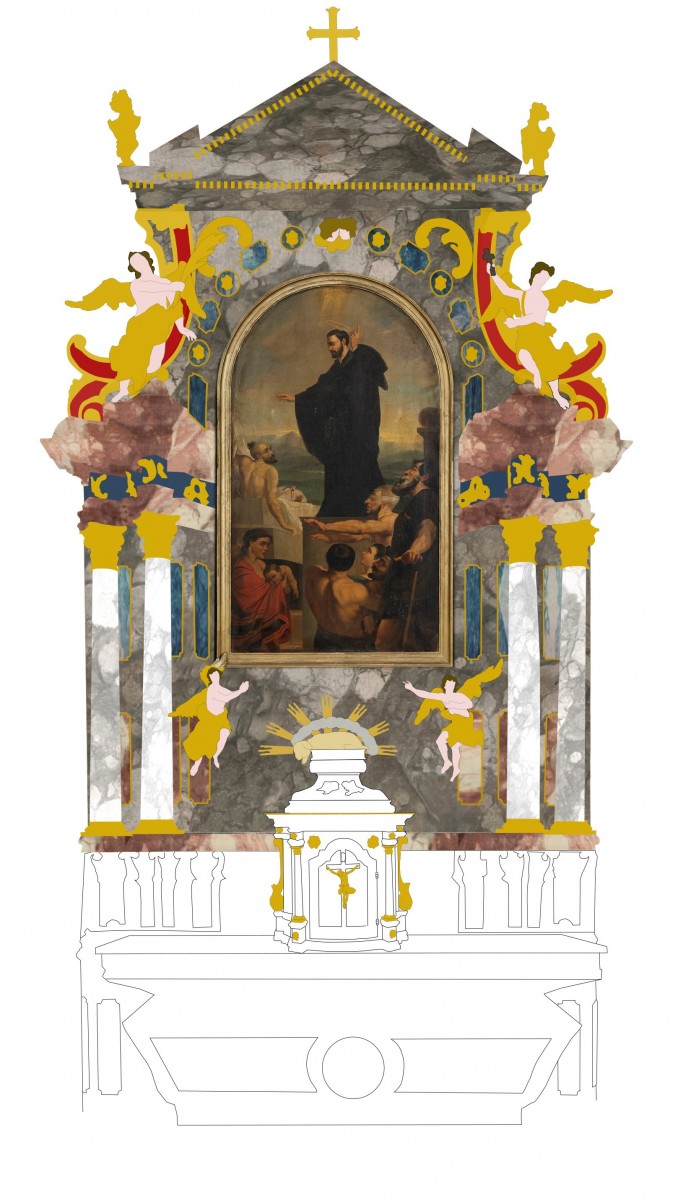
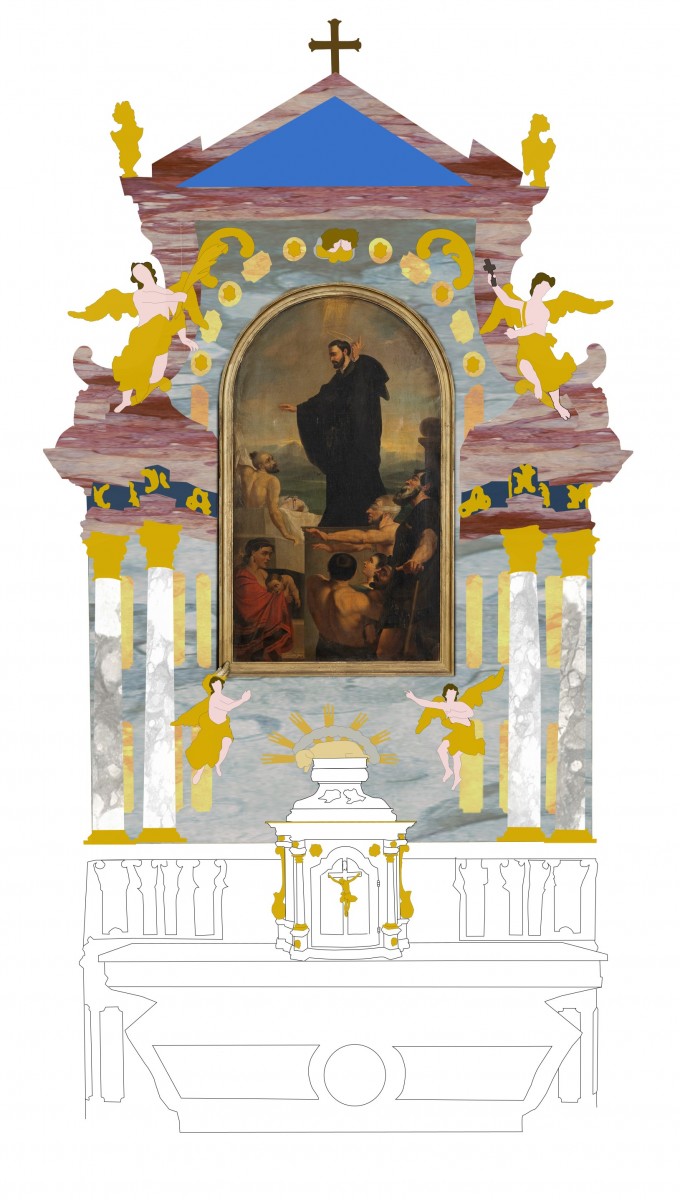
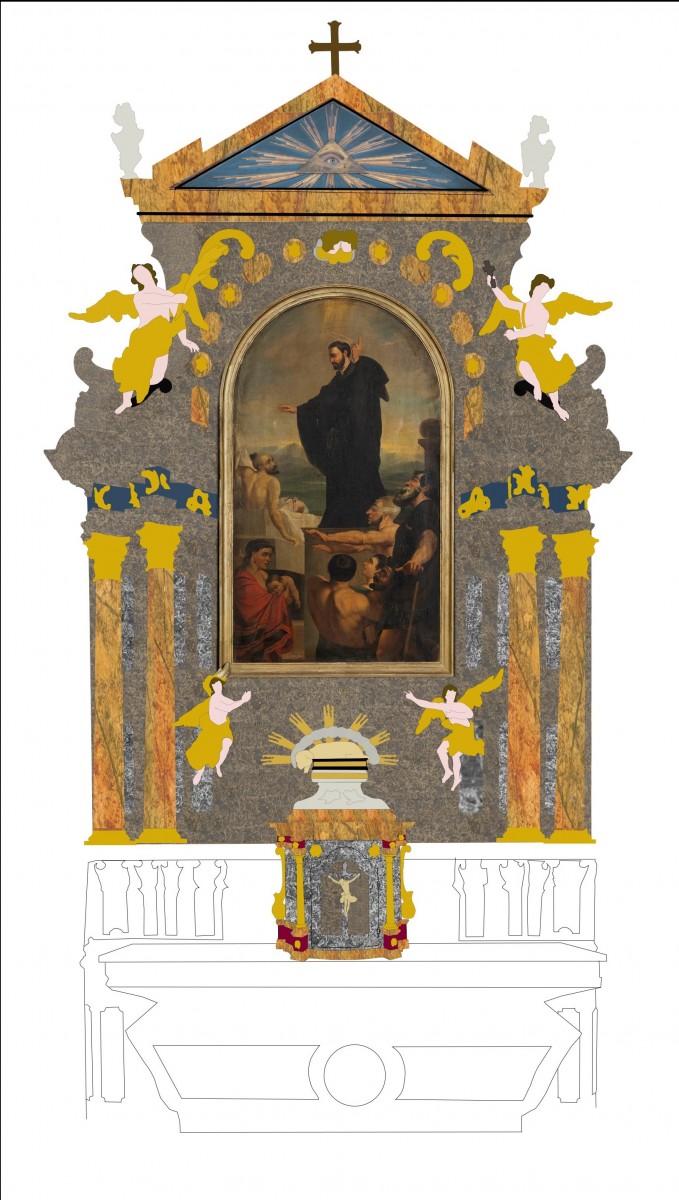
The church was built in 1759 (Ins. 3) as a donation of the Zagreb bishop Francisus Thauszy, replacing a wooden chapel near the market place on the bishopry estates.1 It was affiliated to the parish of St Michael until 1803 when it became a parish church.2 The church was consacrated along with the three altars by the same bishop on 29th July 1759.3 The high altar was mentioned in the canonical visitation in 1765 as a donation of bishop Franciscus Thauszy.4 Originally, there was a painting of the Black Madonna of Częstochowa (transferred from the high altar in the previous chapel)5 above the painting of St Francis Xavier. Several sculptures were placed between the four columns.6 These two paintings were replaced in 1838 by a single, much larger painting "The Miracle of St Francis Xavier" (after P. P. Rubens)7 painted by Mihael Stroy (Ins. 2), who received 500 forints from the Parish.8 In the same renovation the attic bearing glory with the Christ's monogram (described in 1779) was replaced by the Classicist pediment, which was repainted to imitate closely the polychromy of the older parts of the altar architecture.9 Nevertheless, the renovation of all altars and the pulpit was mentioned as soon as in 1858.10 The conservation-restauration investigations reveal pale bluish and pale red marblings from that phase.11 Doris Baričević attributed the four sculptures of angels to Franz Anton Straub, based on the comparison with the style of his brothers.12 According to the symbols of the cross and the palm branch, the adoring angels were previously placed aside the tabernacle. The posture of the two smaller angels indicate that they were pointing to the painting, probably the one of the Madonna of Częstochowa that was mentioned to be framed by gilded ornaments.13 A representation of the slaughtered lamb on the tabernacle, although common in Southern Germany's late rococo,14 is very rare in Croatia.
The parish chronicle recorded that altars were damaged in the 1880 earthquake and many sculptures fell off. The next year the church and its inventory were repaired on the expenses of the archbihop of Zagreb Josip Mihalović.15 According to the conservation-restoration investigations, the high altar was not repolychromed during that renovation, but it was repainted soon after, in 1987, by Felix Stuhec (Ins. 4) and Eduard Wagmeister (Ins. 5).16 The altar was repolychromed again in 1944 by the gilder from Zagreb Ivan Robnik, on the expense of the Parish Vugrovec (Ins. 1). The work was paid 200 000 kn.17
In 2011 the previously polychrome crucifix was recently completely regilded by Branimir Bobnjarić, together with columns and flowers of the tabernacle.
Components
- Carpentry
- Construction of the retable
- Completed: ca. 1759
- Patron(s): Franciscus Thauszy, bishop
- Technique(s): sawing
- Material(s): softwood
- Carpentry
- Construction of the pediment
- Completed: 1838
- Material(s): softwood
- Sculpture
- Author: Franz Anton Straub (Wiesensteig 1726 – Zagreb ca. 1774)
- Completed: ca. 1759
- Patron(s): Franciscus Thauszy, bishop
- Material(s): wood
- Painting
- Black Madonna of Częstochowa
- Painting
- St Francis Xavier
- Completed: ca. 1759
- Patron(s): Franciscus Thauszy, bishop
- Painting
- The Miracle of St Francis Xavier
- Author: Mihael Stroy (Ljubno na Gorenjskom 1803 – Ljubljana 1871)
- Completed: 1838
- Patron(s): owner, parish
- Technique(s): oil on canvas
- Polychromy
- Polychromy of the lower part and the sculptures
- Completed: ca. 1759
- Patron(s): Franciscus Thauszy, bishop
- Material(s): calcium sulphate dihydrate, gold leaf, iron oxide, lead white, silver leaf, ultramarine, vermillion
- Polychromy
- Polychromy of the pediment
- Completed: 1838
- Material(s): azurite, calcium carbonate, calcium sulphate dihydrate, gold leaf, iron oxide, lead white
- Polychromy
- First repolychromy
- Completed: 1858
- Material(s): barium sulphate, calcium carbonate, calcium sulphate dihydrate, iron oxide, lead white, silver, ultramarine, zink white
- Polychromy
- Second repolychromy
- Author: Eduard (Slavoljub, Aloys) Wagmeister ( 1840 – Zagreb 1909)
- Completed: 1897
- Material(s): barium sulphate, brass leaf, calcium sulphate dihydrate, gold, iron oxide, lead white, ultramarine, vermillion, zink white
- Polychromy
- Third repolychromy
- Author: Ivan Robnik
- Completed: 1944
- Patron(s): owner, parish
- Material(s): barium sulphate, brass leaf, calcium carbonate, iron oxide, lead red, lead white, vermillion, zink white
- Polychromy
- Forth repolychromy
- Author: Branimir Bobnjarić
- Completed: 2011
- Patron(s): owner, parish
- Material(s): brass leaf
Comment
The original paintings of St Francis Xavier, as well as of the Madonna of Częstochowa, are not anymore existent. The visible repolychromy was executed by Ivan Robnik in 1944 (Ins. 1).18 Parts of the tabernacle were regilded in 2011.
Conservation-restoration
- 2022
Strategy: preserving one or several repolychromies, removing dirt
Approach to the presentation of losses
Reintegration of lacunae – mimetic: total
Reintegration of losses – other: total
Reconstruction of losses: total
Materials: 3M Spray Mount, Brij 30, buffer, citric acid, demineralized water, epoxy filler, ethyl alcohol, Hydro-Grund, Japanese tissue, Klucel G, Lascaux® Medium for Consolidation, Pemulen TR-2, wood, wood powder, wooden pins
Treatment Description
The church was damaged in earthquake on March 22nd 2020 when the high altar also suffered minor damages of the left vase and left angel's wing which fell off. The altar was partially dismentled within the same year to allow the building to be repaired. In 2022 the Croatian Conservation Institute executed conservation-restoration investigations of the church inventory and started conservation of the high altar.19
Images
- High altar in Vugrovec (Croatian Conservation Institute Photo Archive, photo by Goran Tomljenović, 2019)
- The high altar in Vugrovec, detail with the tabernacle (Croatian Conservation Institute Photo Archive, photo by Nikolina Oštarijaš, 2011)
- High altar in Vugrovec, reconstruction of polychromy from 1759 (drawing by Ksenija Škarić, 2022)
- High altar in Vugrovec, reconstruction of repolychromy from 1838 (drawing by Ksenija Škarić, 2022)
- High altar in Vugrovec, reconstruction of repolychromy from 1858 (drawing by Ksenija Škarić, 2022)
- High altar in Vugrovec, reconstruction of repolychromy from 1897 (drawing by Ksenija Škarić, 2022)
Catalogue entry prepared by Ksenija Škarić and Martina Ožanić
Recommended citation: Ksenija Škarić and Martina Ožanić, High Altar of the Parish Church of St Francis Xavier in Vugrovec, in: TrArS – Tracing the Art of the Straub Family, 2018, (accessed 26/01/2026) URL
